
Heinous Murders by the Modern-Day Education Systems: A Close Examination of Ishiguro’s “Klara and the Sun”
Author: Yue Fan Chen
March 30, 2023
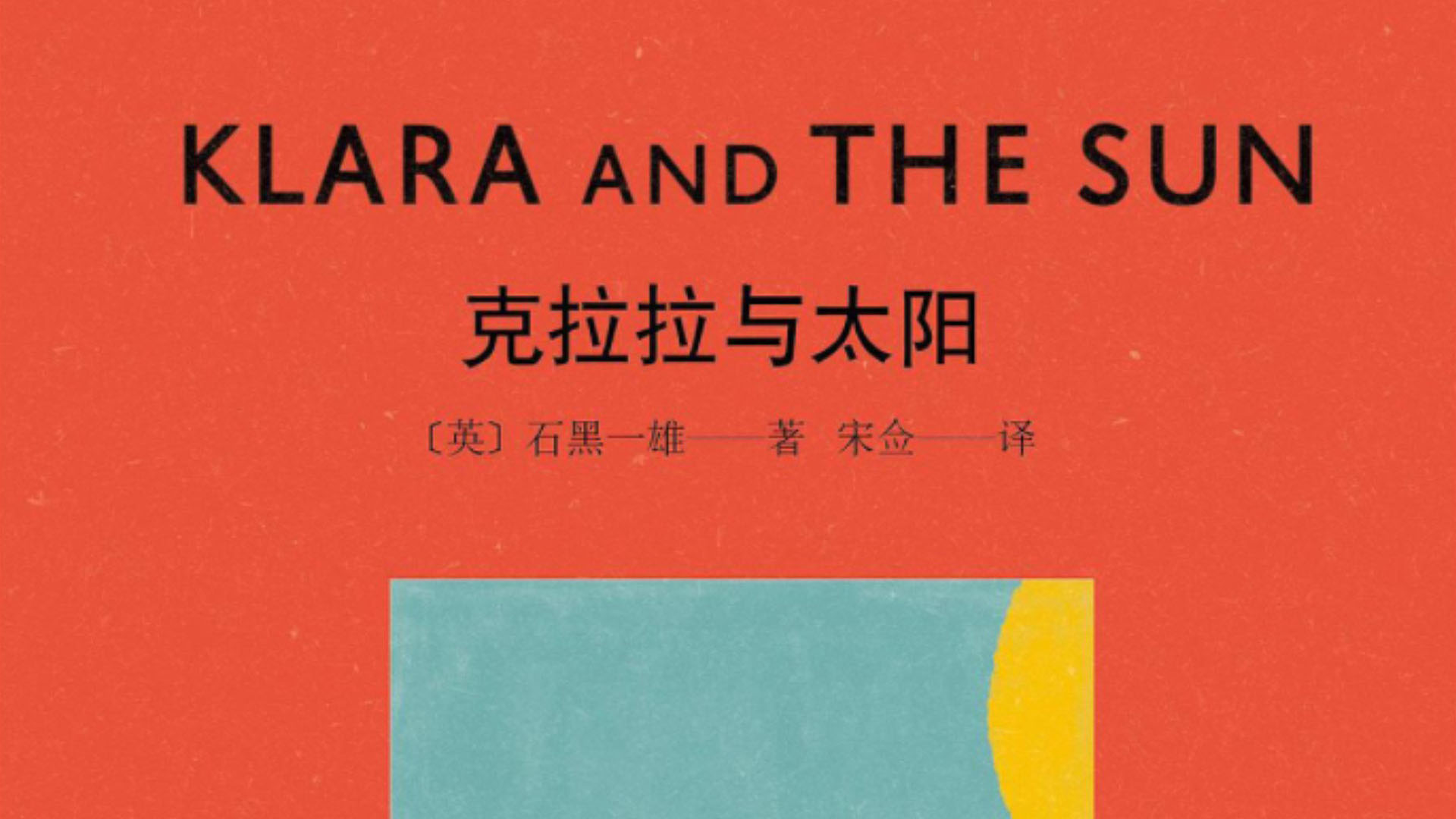
In the novel Klara and the Sun, the Japanese-born Nobel Prize winner Kazuo Ishiguro depicts a futuristic world, in which parents may genetically edit their newborn children.[1][2] Genetic modification, or “lifting,” bestows superior intelligence upon the modified child but occasionally causes lethal diseases. Ishiguro purports to condemn Asian education systems by depicting a fictional, oppressive education system that harms children and accentuates parental hypocrisy.
The novel unravels around Josie, a fourteen-year-old girl, who suffers from a lethal illness as a result of lifting. Throughout the book, the robot narrator Klara, a robot which Josie’s mother Chrissie has purchased to replace Josie in the event of the latter’s untimely death, recounts her experiences with Josie and reveals the extent of Josie’s progressive physical deterioration. Klara’s narrative indirectly exposes many sanctimonious aspects of humanity, including parental hypocrisy. In the end, Klara’s friendship led to Josie’s miraculous recovery.
In the story, Chrissie lifted Josie’s older sister Sal, which led to Sal’s death. Despite claiming to have suffered extreme grief following Sal’s loss, Chrissie still decides to edit Josie, making her fatally ill. The fact that Chrissie consistently makes choices that endanger her children while insisting that she loves them illustrates her hypocrisy. While Josie is dying, Chrissie even asks Klara to mimic Josie’s appearance and behavior, claiming that she would be unable to survive if Josie dies. The fact that Chrissie could live with the knowledge of having killed both of her daughters Sal and Josie, as long as she has a robot that resembles Josie, is not only downright appalling, but indicative of her lamentable hypocrisy.
Ironically, Chrissie is praised for “killing” her older daughter and making her younger daughter fatally ill, presumably for her determination to ensure her daughters’ superiority. During a party, other mothers applaud Chrissie’s decision to lift Josie, saying, “You were so courageous, after all you’d been through.” It is appalling that the society would champion such a merciless act—an act that could cause the premature demise of one’s own children.
The society’s over-competitiveness leads to the general acquiescence of the parents’ acts of violence. In Ishiguro’s fictional world, all the colleges, with the exception of a university named Atlas Brookings, automatically disqualifies unlifted applicants. Consequently, the vast majority of unlifted students are unable to attend college and find gainful employment. The name “Atlas” means “enduring” while the word “brook” means “to tolerate.”[3][4][5] The aforementioned university’s accommodating nature and eponymous name of tolerance imply that the rest of the society is intolerant of the unlifted, who are presumed to be intellectually inferior. Ultimately, Ishiguro insinuates that the society is the root cause of the parents’ hypocrisy. The society forces parents to choose between their children’s future successes and physical well-being. As a result, most parents choose to lift their children, failing to realize that their children’s lives outweigh success, which ultimately culminates in their hypocritical behavior and the tragedies of their children. The society, rather than the parents, is the ultimate culprit for the harm inflicted upon the children.
Rick, an unlifted, exemplifies the aforementioned intolerance of his presumed intellectual inferiority. He suffers prejudice and is considered a social outcast. When Rick appears at a party of the lifteds, he is treated with condescension. When Rick asks to borrow an item from a lifted boy named Danny, Danny scoffs, “I wouldn’t hand it over to you…I’d never lend you anything. Why would I? You shouldn’t even be here.” The blatant discrimination reaches a crescendo when a lifted parent loses her temper and berates Rick for appearing at the party. She reproves Rick, “[…]You leave Danny be! And Danny’s right, you shouldn’t be here at all,” resonating with Danny’s earlier remark. Rick’s experiences clearly demonstrate the oppression inflicted upon the unlifted, which is presumably a significant incentive for parents to lift their children.
Competitive education systems are not unique to fictional worlds. There is an uncanny resemblance between the education systems in the novel and those in Asian societies, where mediocrity is not tolerated. Consequently, Asian parents feel compelled to pressure their children, often at the expense of their children’s mental well-being, to the point of driving them to commit suicide. In South Korea alone, 9.1 suicides occur annually for every 100,000 people aged 9-24, far outstripping the number of South Korean youth fatalities from cancer.[6] The majority of these suicides have been attributed to pressure regarding academics and future prospects.[7] The above issue is strikingly similar to the situation in the novel, where health becomes the trade-off for success.
Striking similarities may also be observed between lifting-induced illnesses and pressure-induced depression. In both cases, conditions originate from overcompetitive education systems. Likewise, both health conditions aggravate slowly and may potentially kill children either through deteriorating physical health or depression-driven suicides. Furthermore, both conditions are amorphous—the illnesses in the book are not explicitly described, while depression in the real world rarely has an obvious cause. The uncanny resemblance between the two conditions can only be intentional. Furthermore, in both the fictional world and the real world, parents use harmful measures—either pressurization or genetic modification—to forcefully mold their children into excellence for fear that mediocrity will lead to isolation and degradation. Evidently, intelligence is regarded as an attribute of paramount significance in both worlds, and those with mediocre intelligence are discriminated against in both universes.
Collectively, the numerous similarities between the education systems in the novel and reality are too striking to be dismissed as mere coincidences. Ishiguro has drawn a parallel between the two worlds; in portraying the cruelty of the education system in the novel, Ishiguro exposes the oppressive education systems of our modern-day society. Through his insinuation that the society in the novel is responsible for the behavior of the parents, Ishiguro indirectly condemns Asian education systems for precipitating parental pressure and victimizing children. Ultimately, Ishiguro calls for children’s salvation by enlightening the readers that it is only possible with the mitigation of the deeply entrenched social prejudice against mediocrity.
Works Cited
1. Ishiguro, Kazuo, Klara and the Sun. Stuttgart: Klett Sprachen GmbH, 2023.
2. “Kazuo Ishiguro.” Encyclopædia Britannica. Encyclopædia Britannica, inc., January 25, 2023. https://www.britannica.com/biography/Kazuo-Ishiguro.
3. “Brook Definition & Meaning.” Merriam-Webster. Merriam-Webster. Accessed February 11, 2023. https://www.merriam-webster.com/dictionary/brook.
4. “Meaning and Origin of: Atlas.” Family Education. Accessed February 11, 2023. https://www.familyeducation.com/baby-names/name-meaning/atlas.
5. Rhys, Dani, “Atlas – Titan of Endurance in Greek Mythology.” Symbol Sage, February 10, 2022. https://symbolsage.com/atlas-greek-mythology/.
6. Yonhap, “Suicide Remains Leading Cause of Death for S. Korean Teens, Youths.” The Korea Herald. The Korea Herald, April 27, 2020. http://www.koreaherald.com/view.php?ud=20200427000687.
7. Yonhap, “Nearly 34% of S. Korean Adolescents Have Thought About Suicide Over Academic Pressure: Poll.” The Korea Herald. The Korea Herald, July 24, 2019. http://www.koreaherald.com/view.php?ud=20190724000749. /view.php?ud=20200427000687.

(for college and high school students)
Staff Writer Leader:SpencerCopyright © 2023 The Global Horizon 沪ICP备14003514号-6