
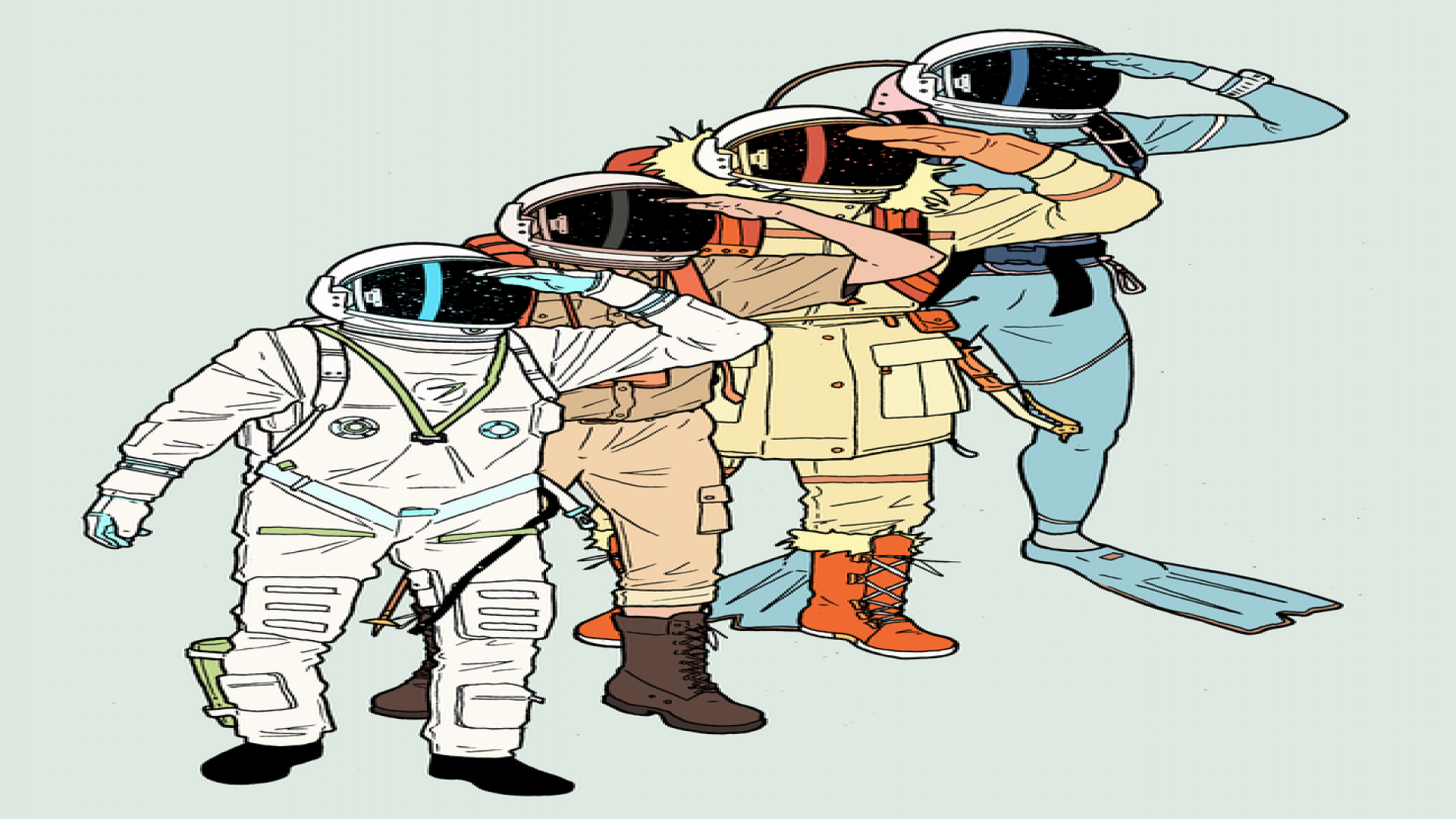
Future Mars missions will demand a new type of astronaut—one capable not just of technical excellence but also of thriving in extreme isolation, danger, and monotony. Unlike the International Space Station or Moon missions, a Mars trip involves over 200 days of space travel and years of confinement with crewmates in hostile environments. NASA has traditionally favored engineers, scientists, and military pilots, but long-duration interplanetary travel may require a different kind of resilience—more commonly found in outdoor adventurers, polar researchers, or saturation divers.
One such example is Joe Dituri, a diver, engineer, and retired naval officer who spent 100 days underwater in a cramped lab to simulate aspects of Mars missions. Dituri’s exuberance and comfort in extreme isolation made him a unique case study, though his high-risk behavior and bombastic personality may have kept him from being chosen as an astronaut despite applying in 2024.NASA has historically overlooked candidates like Dituri, despite its awareness that outdoor professionals may be well-suited to deep-space travel. For instance, astronaut Christina Koch, currently on Artemis II, combines an engineering background with experience in polar stations, representing a rare fusion of technical skill and expeditionary grit. The agency’s current requirements are relatively flexible—advanced STEM education or flight experience plus three years of related work—but recruitment still favors conventional profiles.
As space missions grow longer and riskier, qualities like autonomy, adaptability, and salutogenesis—the ability to find meaning and beauty in hardship—may become crucial. This shift could open doors to mountaineers, guides, and explorers whose work demands emotional regulation, teamwork, and multi-skilled competence in extreme environments.Yet risk-taking remains a major hurdle. NASA’s safety culture discourages thrill-seeking, fearing that such tendencies undermine mission reliability. Still, experts argue that traits underlying adventure—like deep, sustained motivation—are valuable, especially when paired with an appreciation of wonder. As Pascal Lee of the Mars Institute puts it, future astronauts must be “aces of several trades.” And, as space becomes more emotionally and physically demanding, the ability to find awe—even in isolation—might be just as essential as piloting a spacecraft.
