
A passenger train in northeastern India struck a large herd of elephants early Saturday morning, killing seven elephants and injuring one more. The accident happened in a forested area of Assam, a state known for its wildlife and tea plantations. Although the train partially derailed, no passengers were injured.
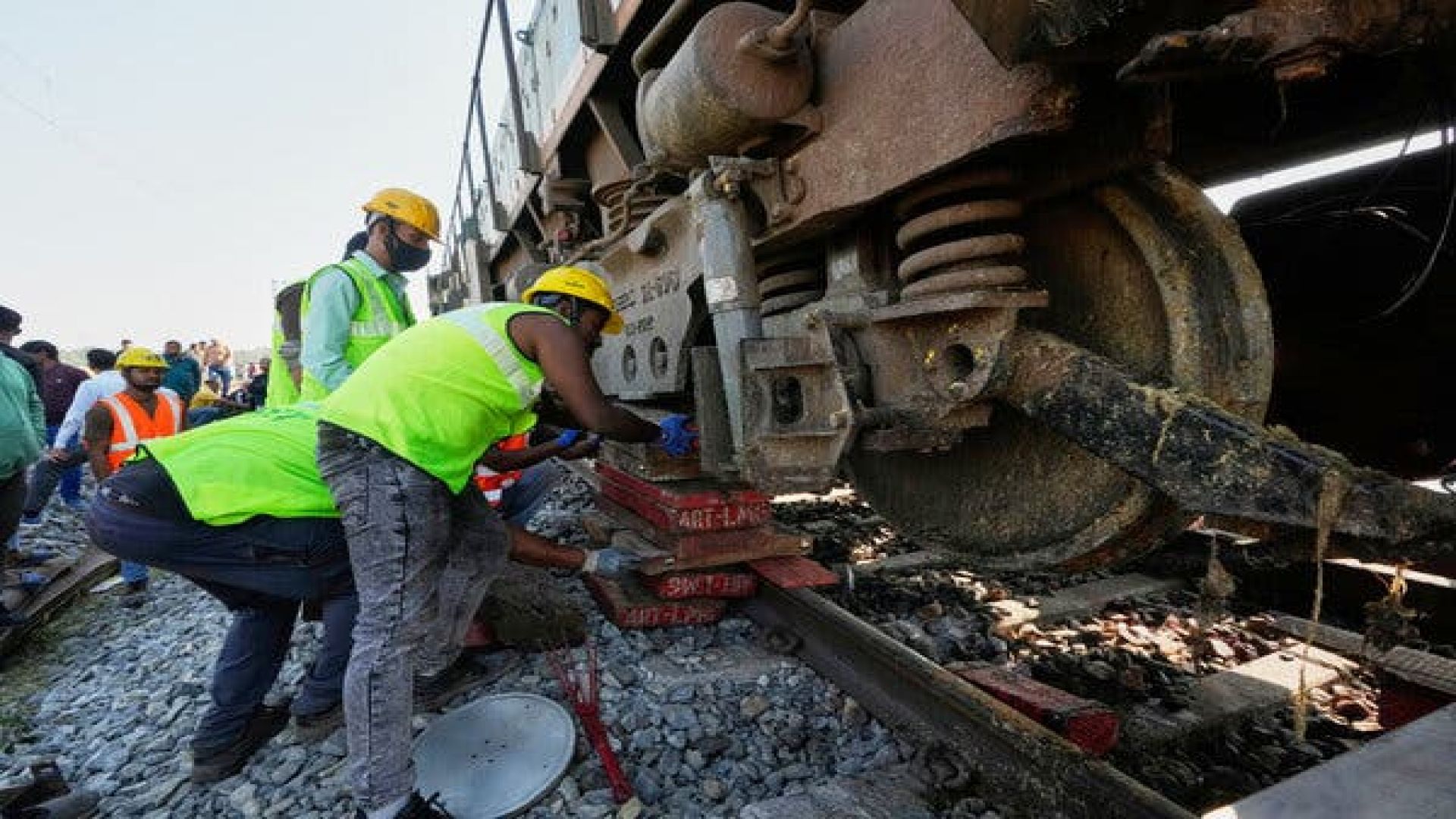
Railway officials said the train’s driver saw about 100 elephants standing on the tracks and immediately applied the emergency brakes. While this slowed the train, it was not enough to stop it completely. The train hit three adult elephants and four young ones. The impact caused the engine and five train cars to derail. Around 200 of the train’s 650 passengers were in those cars, but they were safely moved to other sections of the train. Afterward, the train continued its journey to Guwahati and then to New Delhi.
Train services in the area were disrupted for several hours as other trains were diverted to different routes. Officials praised the driver’s quick reaction, saying it likely prevented human injuries. Elephant-train collisions are a serious problem in India. Elephants often cross railways, highways, and villages while searching for food. To reduce accidents, India has created 150 “elephant corridors,” where drivers are warned to slow down and give elephants the right of way. However, the accident in Assam did not happen in a designated corridor.
Experts say increasing human development has reduced elephants’ natural habitats, forcing them to roam more widely and cross tracks in unexpected places. While governments have tried using technology like vibration sensors and surveillance systems to track elephant movements and warn train operators, conservationists say these tools have not worked well in practice.
According to government data, dozens of elephants have been killed by trains in recent years. Train collisions are now the second leading cause of accidental elephant deaths in India, after electrocution. This tragedy highlights a global issue of wildlife struggling to survive alongside expanding human infrastructure. Similar conflicts between animals and transportation systems occur worldwide, raising questions about conservation, development, and how countries can better protect endangered species while meeting human needs.
