
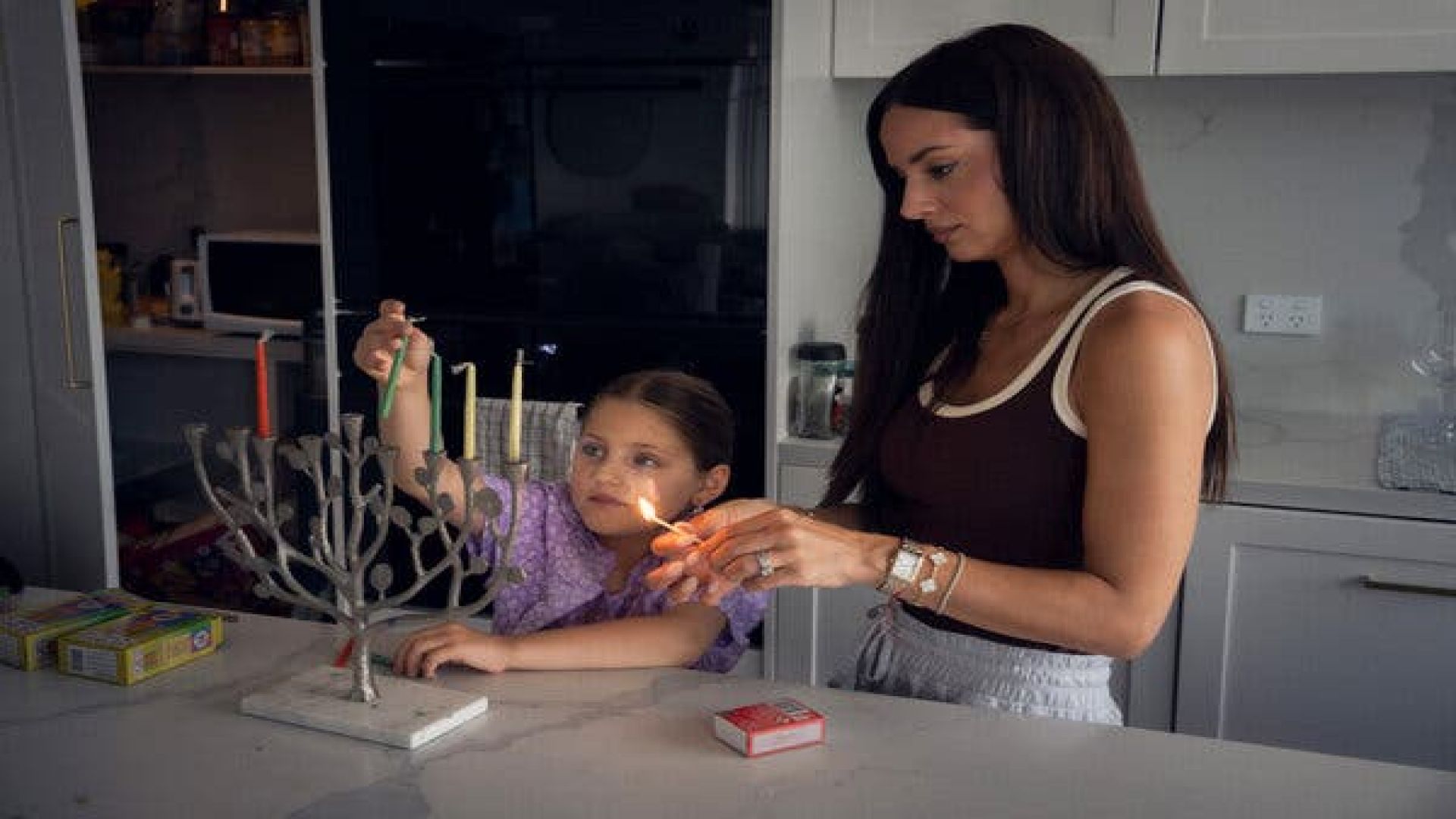
For many Jewish Australians, feelings of insecurity have long been part of daily life. Rebecca Di Veroli, who grew up Jewish in Australia, remembers armed guards outside synagogues, high walls around Jewish schools, and her father’s fear of attending Jewish events in public spaces. Although she once thought those fears were exaggerated, they became frighteningly real during a Hanukkah celebration at Bondi Beach in Sydney last Sunday.
During the event, gunmen opened fire on the crowd. Di Veroli described lying on top of her 5-year-old son under a table, trying to protect him as bullets landed nearby. A rabbi who had been serving food moments earlier was shot in the chest. The attack killed 15 people, and authorities later said the gunmen were inspired by the extremist group Islamic State.
The attack deeply shocked Australia’s small but close-knit Jewish community, many of whom are descendants of Holocaust survivors who fled Europe to escape persecution. Bondi Beach, where many Jewish families settled after World War II, had long been a place of celebration, hosting events like bar and bat mitzvahs and annual Hanukkah gatherings. For decades, these events were seen as safe and joyful traditions.
Tensions had already been rising before the attack. Since the Hamas-led assault on Israel on Oct. 7, 2023, and the war in Gaza that followed, Australia has seen an increase in antisemitic vandalism, threats, and attacks, including firebombings of synagogues and Jewish businesses. In response, the Australian government increased police protection, strengthened hate-crime laws, and invested more money in security.
However, some community members feel these actions came too late. After the Bondi Beach attack, many expressed anger and disappointment, saying the government did not act quickly enough despite earlier warnings from its own antisemitism envoy. This attack reflects a wider global rise in antisemitism and religiously motivated violence linked to international conflicts. Similar concerns are being raised in countries across Europe, North America, and beyond, highlighting how global tensions can affect minority communities far from the original conflict zones.
