
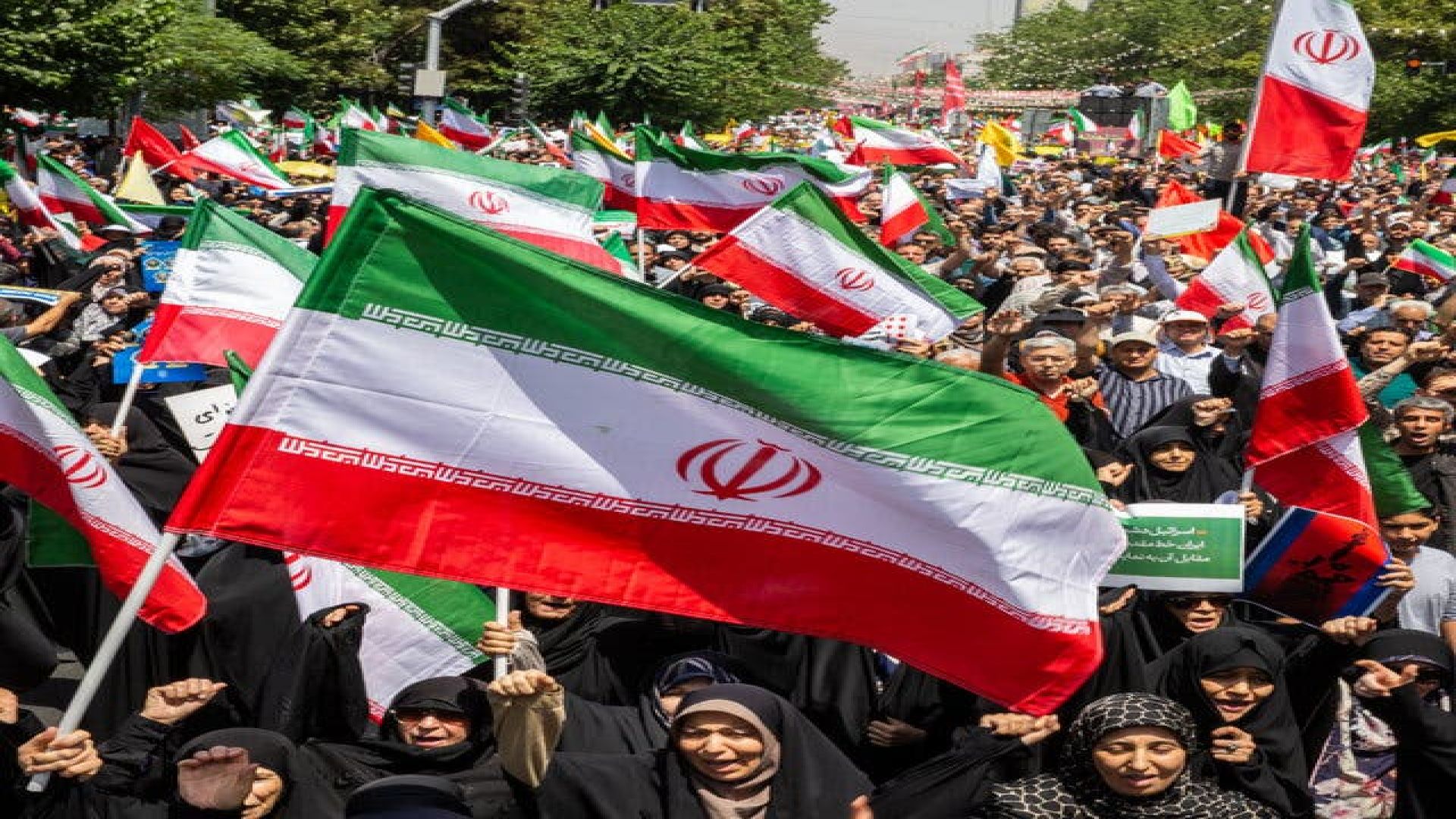
Tens of thousands of demonstrators across Iran, Iraq, and Lebanon rallied on Friday in a coordinated display of anger toward Israel amid an escalating regional conflict. These mass protests followed Friday prayers and were framed by Iranian state media as both “rage and victory” demonstrations, reinforcing public support for Iran’s leadership and its military actions.
In Tehran, demonstrators surged into central squares, chanting anti-Israel and anti-American slogans while burning flags and carrying portraits of Supreme Leader Ayatollah Ali Khamenei. Similar scenes unfolded in other major Iranian cities like Tabriz and Mashhad. The rallies occurred as Israel and Iran continued to exchange missile strikes, despite diplomatic efforts in Geneva, where European leaders met with Iran’s foreign minister in a bid to de-escalate the confrontation.
Israel had struck Iranian military infrastructure, including missile factories and a nuclear-linked research center. Iran responded with a new barrage of missile fire directed at Israeli cities, highlighting the dangerous tit-for-tat nature of the ongoing hostilities.
In Iraq, thousands protested in Baghdad’s Sadr City, a Shiite stronghold, expressing solidarity with Iran and condemnation of Israel. Symbolic martyrdom was on full display, with many donning white burial shrouds. Demonstrations also erupted in Basra and Najaf. Meanwhile, in southern Beirut, Hezbollah’s stronghold, Lebanese demonstrators pledged allegiance to Iran’s leadership while marching through neighborhoods previously damaged by Israeli airstrikes.
Although Hezbollah, Iran’s most powerful regional proxy, has so far signaled a desire to avoid direct involvement in the current conflict, tensions remain volatile. These demonstrations mirror a broader global pattern of mass mobilization around protracted regional conflicts, such as protests against the war in Gaza or support for Ukraine and Palestine. As world powers push for de-escalation, the Middle East remains a flashpoint where grassroots anger, historical grievances, and geopolitical rivalries collide with global diplomatic efforts.
