
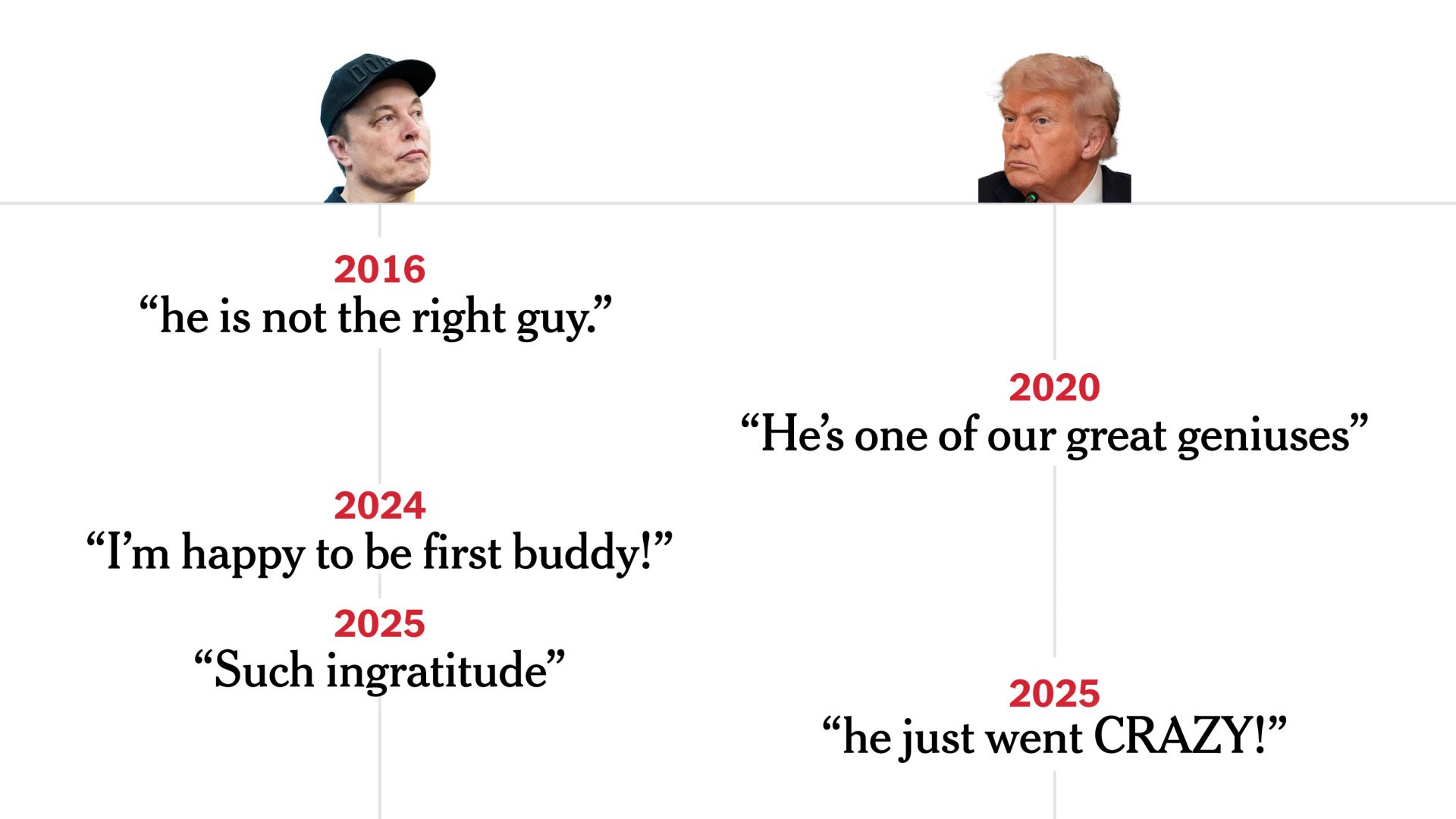
The relationship between Elon Musk and President Trump has undergone a dramatic transformation. Initially marked by skepticism, Musk criticized Trump’s character in 2016, while Trump alternated between praise and mockery of Musk. Over time, their interactions grew more cordial, culminating in a close alliance during Trump’s 2024 campaign and early presidency. Musk endorsed Trump following an assassination attempt on Trump, contributed over $250 million to his re-election, and was appointed as a top adviser with broad influence over federal bureaucracy.
Throughout 2024 and early 2025, both men exchanged public admiration. Musk praised Trump’s resilience and leadership, while Trump celebrated Musk’s innovation and pledged personal support for Tesla. Their partnership appeared strong, with Musk playing a visible role in shaping policy and messaging. However, underlying tensions surfaced, particularly during Musk’s dispute with economic adviser Peter Navarro.
In June 2025, the alliance collapsed after Musk criticized Trump’s domestic spending bill, calling it fiscally irresponsible. Trump responded with personal attacks, accusing Musk of ingratitude and threatening to revoke government subsidies. Musk escalated the conflict by referencing Trump’s alleged ties to the Epstein investigation, a claim that marked a clear break.
This fallout highlights the fragility of political alliances built on mutual benefit rather than shared principles. Musk and Trump’s partnership was driven by influence and visibility, not ideological alignment. Their public feud emphasizes how quickly such relationships can unravel when policy disagreements collide with personal ambition and how power dynamics in politics are often shaped more by strategic calculation than by loyalty.