
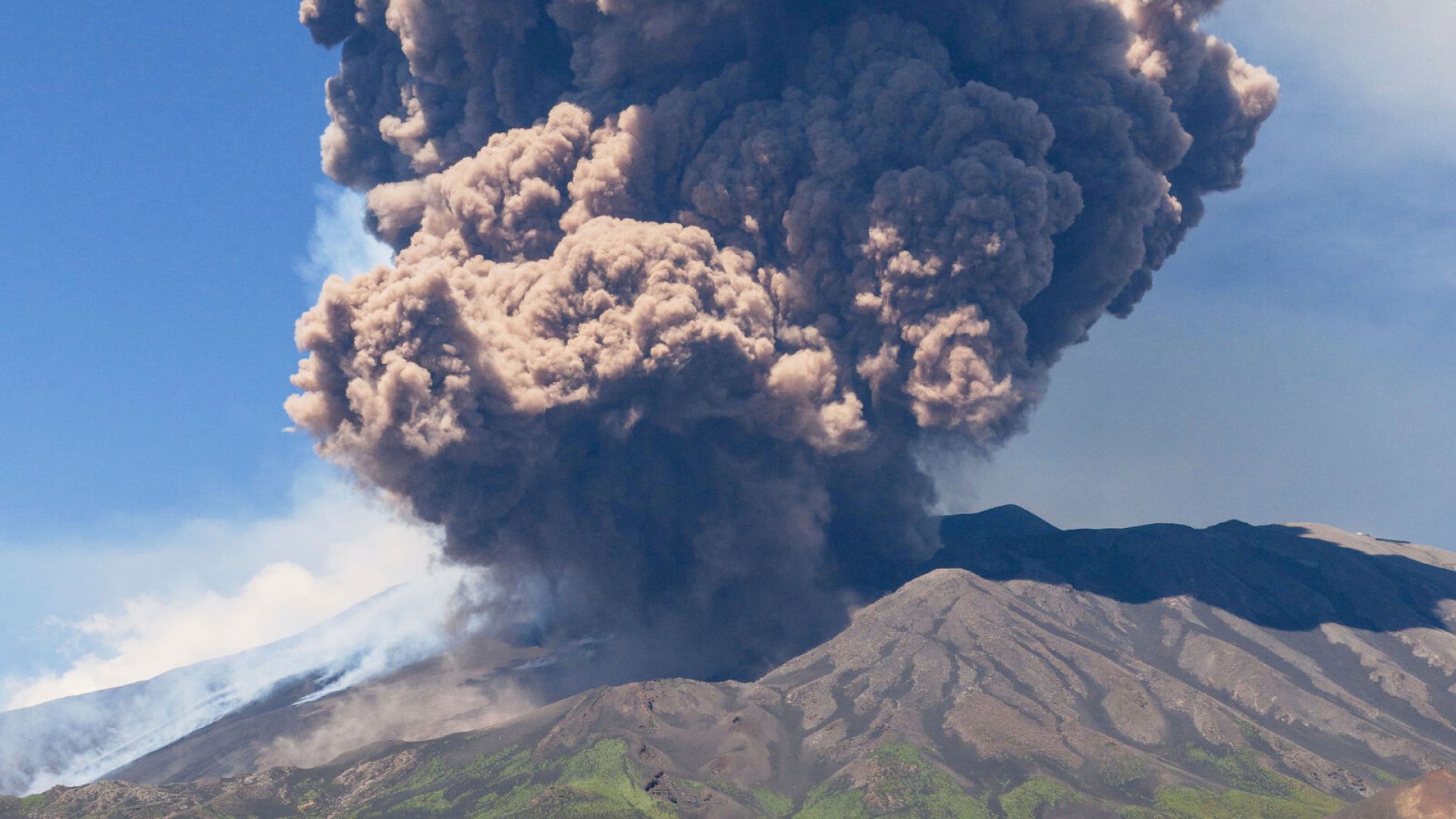
On Monday, tourists on Sicily’s Mount Etna were forced to evacuate after a sudden eruption sent clouds of ash, gas, and volcanic rock into the sky. Though no injuries or fatalities were reported, videos on social media showed hikers fleeing the slopes as the eruption unfolded. The volcanic activity disrupted travel, delaying over 20% of incoming flights at Catania Airport. According to Italy’s National Institute of Geophysics and Volcanology, the explosions were concentrated at the summit, an area already closed to tourists, and were classified as “strong intensity.” The institute later confirmed the volcanic activity had subsided.
Mount Etna, one of the world’s most active and closely monitored stratovolcanoes, has frequent eruptions and near-continuous activity. Millions visit Sicily each year, with over a million visiting Etna specifically. Despite repeated warnings, some tourists continue to approach the mountain’s slopes, underestimating the risks. A previous eruption occurred in February, underscoring the volcano’s persistent volatility.
British tourists Hannah and Charlie Camper, staying 10 miles from the crater, captured footage of the eruption as it intensified. They reported not receiving any emergency alerts, highlighting gaps in local communication protocols. "We were waiting to hear something, but nothing came through even though the smoke was getting bigger," Ms. Camper said, recalling visible lava flows descending the mountain.
Sicily, now a prominent tourist hotspot partly due to its portrayal in HBO’s *The White Lotus*, has recently faced a mix of environmental challenges including extreme heat, wildfires, and water shortages, all amplified by climate change.
Etna’s eruption underscores the global challenge of managing tourism in disaster-prone natural environments. Similar risks are seen in destinations like Iceland, Hawaii, and Indonesia, where eruptions or seismic activity regularly endanger both locals and visitors. The event reinforces the need for robust early-warning systems and responsible tourism around natural hazards.